
Is the Apple Watch Series 12 Worth It? Reviews Praise the Sensors
 by Lucas Almeida
3 min read
by Lucas Almeida
3 min read
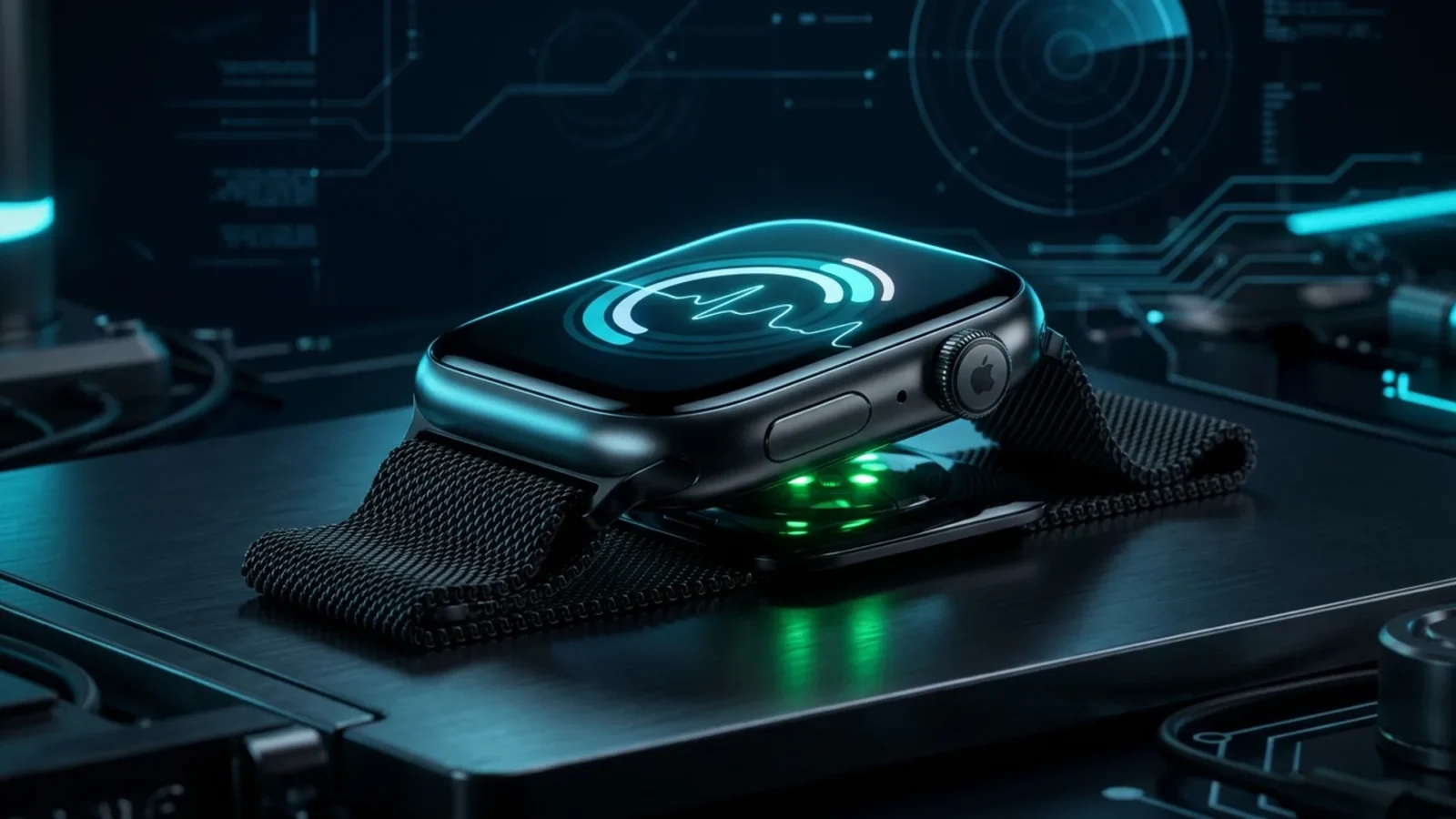
The Apple Watch Series 12 reached stores on September 18, 2026, and the first reviews converge: it is the most meaningful leap in health tracking since ECG arrived, with no visual change. Engadget scored it 9.1/10; MacRumors and The Verge highlighted the sensors, gestures and faster Siri. Criticism centers on something that is not even available yet: the “Audio Intelligence” features, which use the microphone to listen to your surroundings. Here is the consensus on whether it is worth it — and for whom.
Quick answer: is it worth it?
If you use your watch for health and training, yes: the new sensing system samples heart rate every 5 seconds (previously every 5 minutes) and heart rate variability every 5 minutes (previously every 2–4 hours), feeding the new readiness score. If you own a Series 10 or 11 and do not care about metrics, you can wait. Price unchanged at $399; the ceramic version costs $500 more. The controversial listening features are optional and arrive later.
What reviewers praised
Sensors: from 5 minutes to 5 seconds
The Health Sensing System has electrodes with more contact area (more accurate ECG) and more efficient green LEDs. The result: heart rate sampled 60 times more often and HRV 24 times more often, with a new metric (RMSSD) alongside SDNN. It is the foundation of the readiness score, which needs seven nights to calibrate and tells you whether to train hard or rest — a feature Oura and Garmin had before Apple.
Gestures: single tap
On top of double tap and the wrist flick, the Series 12 adds single tap, which, in Engadget’s words, makes hands-free navigation “actually functional.”
Siri and charging
The Verge noted that AI Siri queries are faster than on the Ultra 3. Charging too: 12 minutes took it from 51% to 79% in Engadget’s test; Apple quotes 80% in 30 minutes.
What reviewers criticized
Siri “listening”
The Live Rewind and Siri Recaps features, which use the microphone to capture nearby sounds and speech and then summarize them, dominated the privacy debate — even though they are not available at launch. Engadget’s take: they are optional and can be declined without affecting anything else.
Same battery, rough edges in watchOS
Battery life matches the Series 11 (light days end around 50%). And watchOS 27’s new dynamic app grid has “some quirks.”
Review summary
| Aspect | Consensus |
|---|---|
| Health sensors | Biggest advance in years; HR every 5 s, HRV every 5 min |
| Readiness score | Good, but arrives after Oura, Whoop and Garmin |
| Gestures | Single tap makes hands-free use functional |
| Battery | Same as Series 11; fast charging |
| Audio Intelligence | Controversial on privacy; optional; not available at launch |
| Price | $399 (unchanged); ceramic +$500 |
| Score | 9.1/10 (Engadget) |
Who should upgrade
Worth it: owners of a Series 7, 8 or 9 (a different generation of sensors, chip and gestures) and anyone who uses the watch for training and sleep. Can wait: Series 10 and 11 owners who are not metrics-focused. Ultra 4: only if two-day battery life is decisive.
Apple Watch Series 12 (GPS)
New sensing system, readiness score and single-tap gesture.
 Buy on Mercado Livre
 Buy on Amazon
 Apple Watch Series 11 (GPS)
Same battery and design for less — ideal if you do not need the new sensors.
Buy on Mercado LivreBuy on Amazon Frequently asked questions
What score did the Apple Watch Series 12 get in reviews?
Engadget gave it 9.1/10, highlighting the new sensing system, gestures and new complications; the only caveat was watchOS 27’s app grid.
What is the Apple Watch readiness score?
A daily index that combines heart rate, variability and sleep to indicate whether your body is ready for exertion. It needs seven nights of data to calibrate.
Does the Apple Watch Series 12 listen to conversations?
The Live Rewind and Siri Recaps features use the microphone to capture surroundings, but they are optional and not available at launch. Without enabling them, the watch works normally.
At DigitalRadar, we summarize the reviews so you can decide without reading ten sites. Stay on the radar for the next roundup.
Related

GTA 6 on Netflix: Extended Look Analysis, Record Reaction and Everything Since
Rockstar swapped trailer 3 for 27 minutes of gameplay on Netflix — and the service went down. We analyze what the Extended…
Is the iPhone 18 Pro Worth It? What the First Reviews Say
The first iPhone 18 Pro reviews landed on September 16. We summarize the consensus on the variable-aperture camera, A20 Pro performance, battery…
GPT-6 Astra vs Claude Fable 5.1 vs Gemini 3.8 Flash: Which AI to Use in 2026?
Three frontier models in two days. We compare GPT-6 Astra, Claude Fable 5.1 and Gemini 3.8 Flash on price, context, focus and…