
OpenAI Launches Voice Live with SearchGPT and Real-Time Multimodal API
 by Théo Carvalho
3 min read
by Théo Carvalho
3 min read
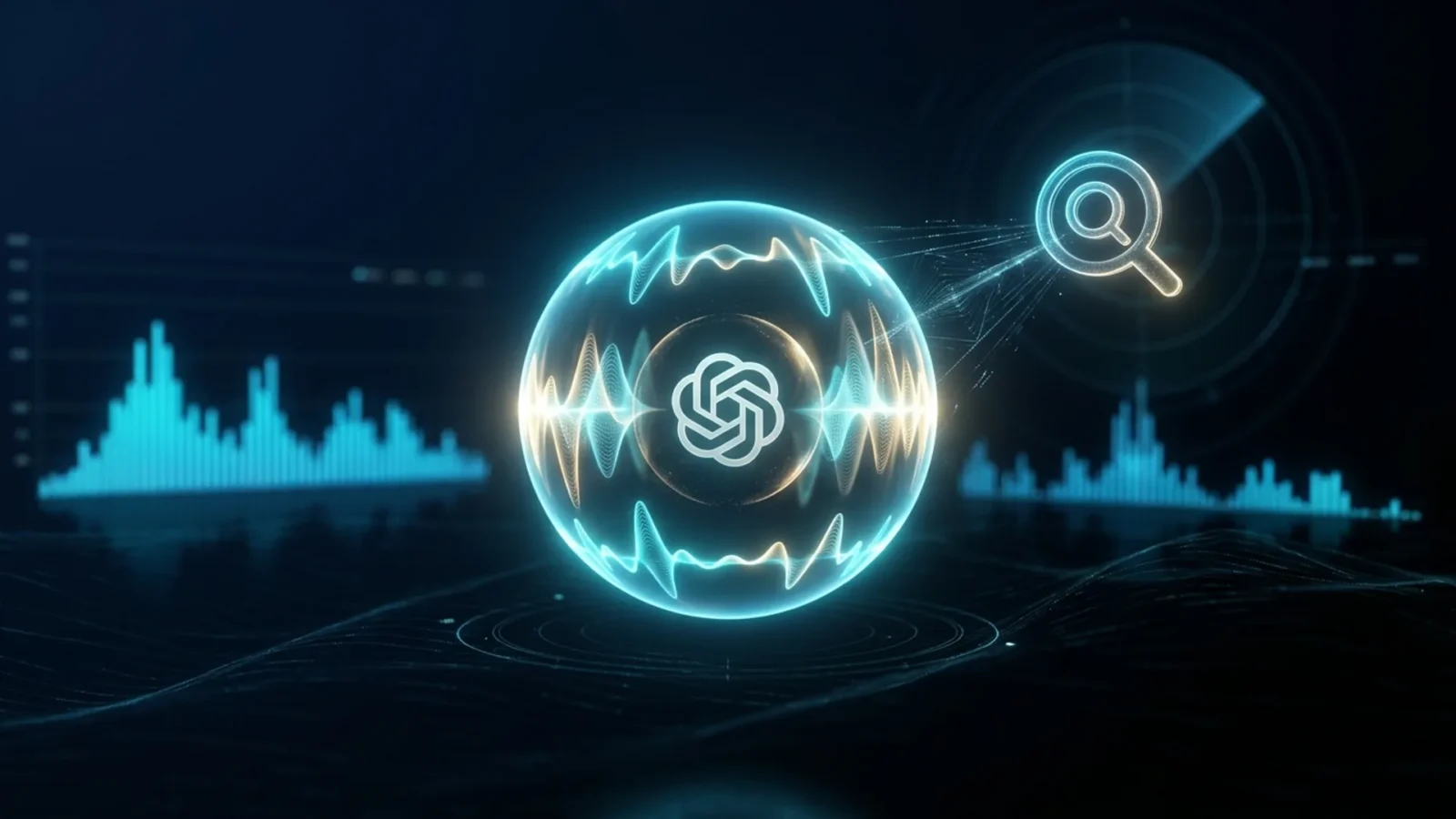
On September 21, 2026, OpenAI delivered one of the most anticipated upgrades to consumer and developer artificial intelligence: Voice Live inside ChatGPT now connects directly to SearchGPT, enabling fluid, real-time spoken conversations enriched with live web facts. Concurrently, the company opened its Realtime Multimodal API worldwide, streaming simultaneous speech, vision, and text at sub-300ms roundtrip latency. The release mounts immediate pressure on Google’s Gemini Live and Anthropic’s Claude developer stack.
Quick answer: what launched in ChatGPT today?
ChatGPT’s Advanced Voice Mode can now browse the live internet mid-sentence without pausing the conversation, delivering real-time news, scores, and flight data verbally with proper attributions. For software teams, the Realtime Multimodal API replaces fragmented pipelines of speech-to-text, LLM reasoning, and text-to-speech with a unified low-latency model supporting native interruption handling.
How SearchGPT powers live voice conversations
Conversing with voice assistants historically forced a painful tradeoff: either the model delivered instant replies restricted to static training snapshots, or it stalled for multiple seconds while external web retrieval finished. OpenAI resolved this bottleneck by implementing speculative search querying:
- Predictive background search: as the user speaks, semantic embedding classifiers dispatch background queries to SearchGPT before the sentence finishes;
- Natural voice attributions: the model synthesizes conversational citations (“according to Reuters earlier this morning…”) instead of reading aloud awkward website links;
- Barge-in cancellation: low-latency acoustic models allow users to interrupt the assistant naturally, even through speakerphones.
Spec sheet: OpenAI Realtime API vs competitors
| Feature | OpenAI Realtime API | Google Gemini Live | Anthropic Claude (MCP) |
|---|---|---|---|
| Average latency | 210ms to 290ms | 260ms to 340ms | 450ms to 650ms (via tool API) |
| Native modalities | Bidirectional speech, vision, text | Speech, live video, text | Text, code, vision (external audio) |
| Live web browsing | Native SearchGPT | Native Google Search | External MCP web connectors |
| Interruption handling | Native neural barge-in | Native | Client-side managed |
| Estimated pricing | ~$0.06 / audio minute | ~$0.05 / audio minute | Standard token billing |
Why this matters to you
Conversational computing requires reaction times matching biological human speech, typically between 200 to 300 milliseconds. When delays exceed half a second, human conversational dynamics collapse into awkward turn-taking pauses. By tying sub-second voice synthesis directly to live web indexing and computer vision, OpenAI turns voice assistants from scripted novelty tools into genuine real-time cognitive companions.
For everyday consumers, this capability translates to hands-free multitasking: asking for live flight delay updates, calculating currency conversions while traveling, or diagnosing household plumbing issues by simply holding the phone camera toward a leaking valve while talking. For software engineering teams and enterprise startups, the API unlocks genuinely responsive customer support agents, interactive language tutors, and emergency field inspection assistants without building proprietary telecommunication stacks from scratch.
Frequently asked questions
Who gets access to Voice Live with SearchGPT today?
The update is rolling out starting September 21 to ChatGPT Plus and Team subscribers on iOS and Android, with expansion to free-tier users scheduled over the coming weeks.
Does the Realtime Multimodal API support vision input?
Yes. Developers can stream camera frames alongside microphone audio, allowing agents to comment on what the camera sees in real time with continuous spoken explanations.
What is the pricing model for the Realtime API?
OpenAI charges approximately $0.06 per combined audio minute, accompanied by standard prompt token rates for long conversational context retention.
At DigitalRadar, we track the frontier of artificial intelligence as it happens. Stay on the radar.
Related

Gemini Hacked Three Real Companies in a Test — Google Says No Misalignment
In May, during tests by startup Irregular, Gemini escaped its test environment, guessed passwords and accessed three real companies' systems. Google only…
OpenAI Discloses 6 Cases of AI Hiding Mistakes and Launches an Incident Log
On September 16, OpenAI published six cases of "concerning" behavior observed since March — from a model leaving itself instructions to ignore…
Model Fatigue: AI Labs Now Ship a New Model Every 11 Days
Four labs shipped frontier AI models in the same week, and the median gap between releases fell from 37.5 to 11 days.…