
Cursor and Cognition Partner to Deploy Autonomous AI Coding Agents to GitHub
 by Lucas Almeida
3 min read
by Lucas Almeida
3 min read
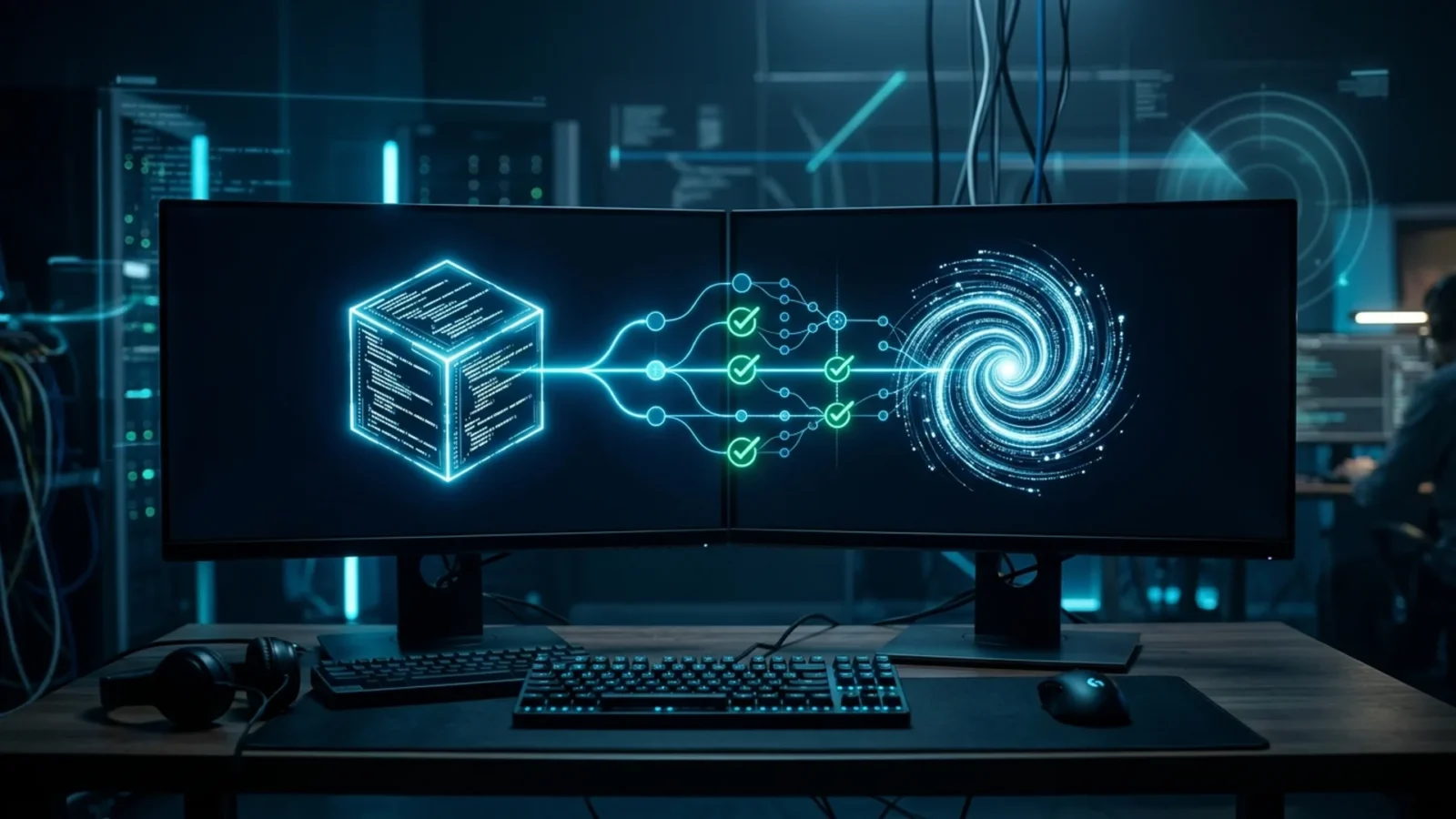
On September 21, 2026, the global software engineering industry witnessed a watershed consolidation: Anysphere (the creator of the popular AI-first editor Cursor) and Cognition AI (the team behind autonomous software agent Devin) announced a strategic technological alliance backed by substantial Silicon Valley investment. The collaboration bridges Cursor’s high-speed local interactive editing with Devin’s deep multi-step reasoning runtime, creating an agentic pipeline capable of listening to GitHub webhooks, triaging customer bug reports, and crafting fully tested pull requests without manual intervention.
Quick answer: what does this partnership unlock?
Developers using Cursor can now delegate end-to-end engineering tickets asynchronously. Instead of merely asking for local code completions or unit test snippets, a developer can dispatch a cloud-hosted Devin agent directly from the editor sidebar: the agent clones the repository into an isolated container, replicates the failing test, applies the patch, confirms passing integration suites, and opens an annotated GitHub pull request ready for human code review.
From passive code completion to autonomous development
For the past two years, developer tools remained bifurcated into two separate categories: ultra-fast autocomplete assistants operating inside the IDE (such as GitHub Copilot and Cursor) and slow autonomous agents operating remotely via terminal interfaces (like Devin). Today’s joint architecture removes this operational friction:
- Shared contextual memory: cloud agents automatically ingest the developer’s local semantic vector embeddings and project guidelines (such as
.cursorrules) to adhere to internal code conventions; - Interactive clarification loops: if an autonomous agent encounters ambiguous business logic or architectural crossroads, it queries the developer through Cursor’s native chat panel;
- Containerized verification: every pull request generated by the system executes automated linters, static analyzers, and Docker regression suites before human notification.
Productivity benchmark: AI programming tools compared
| Capability | Legacy Copilot | Standalone Cursor | Cursor + Devin Integrated |
|---|---|---|---|
| Action boundary | Active line / file | Indexed local project | Entire repo + cloud CI/CD pipeline |
| Bug remediation | Snippet generation | Multi-file diff editing | Autonomous triage and PR generation |
| Test validation | None | Manual terminal run | Automated Docker sandbox verification |
| Developer interaction | Continuous typing | Accepting diffs | Asynchronous dispatch and review |
| GitHub integration | Context reading | Local git commands | Direct issue triage, test runs, and PRs |
Why this matters to you
Across both early-stage startups and enterprise engineering departments, maintaining legacy dependencies, addressing intermittent regression bugs, and responding to GitHub issues consumes up to 40% of an engineer’s weekly hours. By automating the mechanical journey between an issue notification and a verified pull request, small engineering teams can operate with the output velocity of large tech corporations. The software engineer’s role permanently transitions from manual syntax authoring to strategic system architecture and critical code review.
Frequently asked questions
Will autonomous Devin agents replace human engineers?
No. Both Cognition and Cursor emphasize that the agent functions as an indefatigable junior-to-midlevel engineer: it manages tedious maintenance and straightforward bug fixes, but critical architectural decisions and final deployment approvals remain strictly with human maintainers.
How is access to the Devin integration priced?
The feature is currently launching in private beta for Cursor Business and Enterprise tier customers, with usage billed on a per-resolved-ticket compute model.
Is proprietary customer codebase data safe from model training?
Yes. Both companies guarantee complete enterprise data isolation compliant with SOC 2 Type II certifications, legally committing to never use customer code to train public foundation models.
At DigitalRadar, we spotlight the visionary startups transforming technology. Stay on the radar.
Related

Three People, 72 Hours and Claude: The Startup That Hacked OpenAI Accounts
A three-researcher team at Hacktron AI chained two flaws — a HEIF image on OpenAI's forum and a login token that also…
Elion Estúdio: The Brazilian Startup Building Premium Websites “to Last”
Elion Estúdio is the Brazilian startup behind DigitalRadar. Hand-coded premium websites, its own products and a clear philosophy: "we don't build to…
Profound Hits Unicorn Status Selling “SEO for AI”: $180M in 7 Months
Profound raised $180 million and became a unicorn just two years after launch. The startup sells "AEO": tools that help brands get…