
Google Search Console rolls out dedicated AI Overviews traffic metrics
 by Théo Carvalho
3 min read
by Théo Carvalho
3 min read
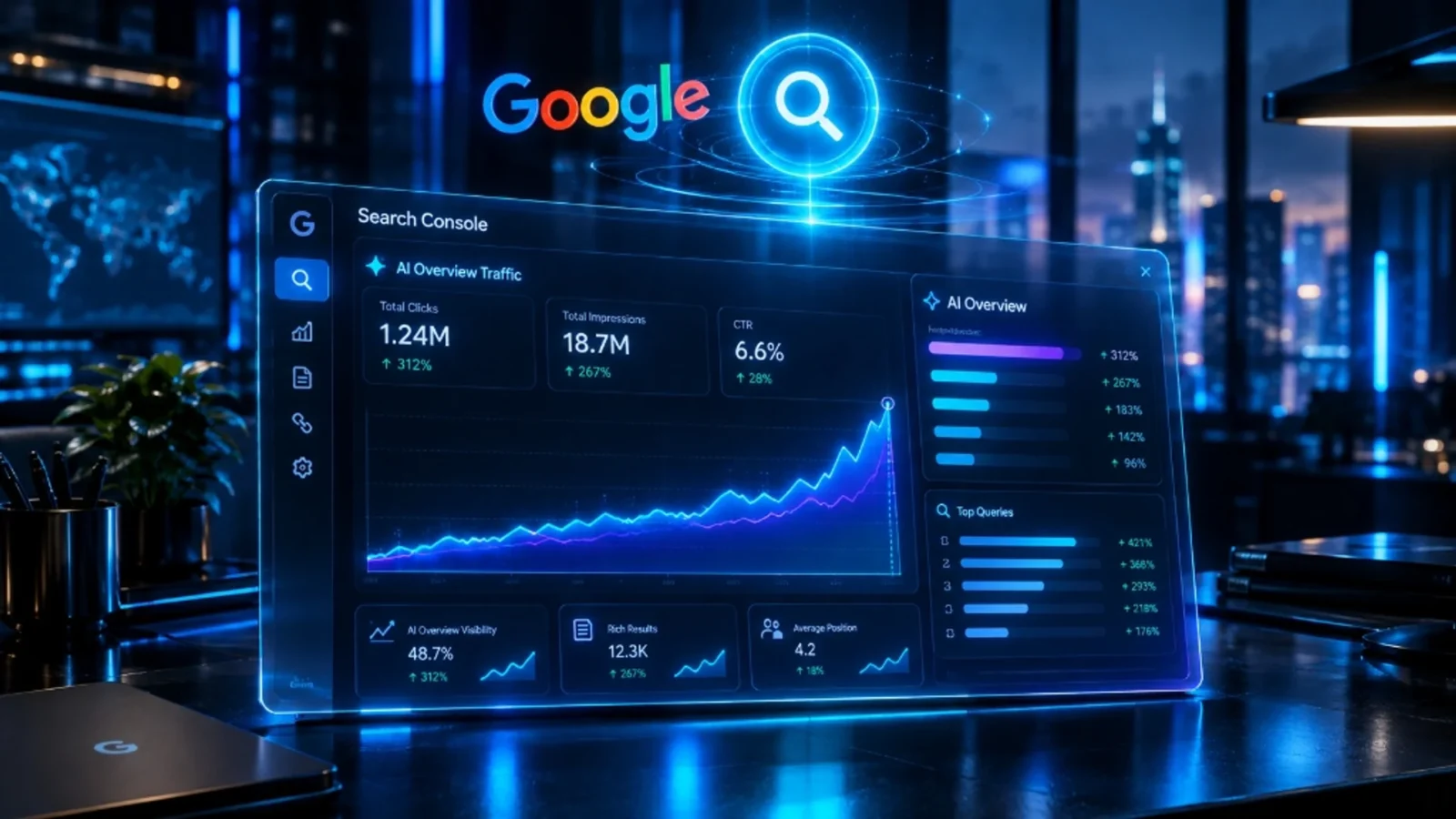
In a watershed milestone eagerly anticipated for over two years by SEO strategists and publishers worldwide, Google Search Console officially deployed on Tuesday, September 22, 2026, a dedicated reporting dimension isolating traffic originating from AI Overviews within Google Search performance dashboards.
Illuminating the zero-click analytics blind spot
Ever since conversational synthesized answer boxes occupied prominent real estate above standard search result rankings, content websites and digital media organizations navigated persistent analytical obscurity: Google previously blended generative citation link clicks directly into generic web results, frustrating efforts to quantify the true commercial value of on-SERP citations.
Through the freshly introduced filter located inside the Search Appearance control tab, webmasters can dissect three mission-critical dimensions: AI Overview Impressions (triggered whenever a page URL renders inside a Gemini citation pill), Citation Clicks, and the corresponding Citation Click-Through Rate (CTR).
Compelling insights: Elevated CTR on long-tail informational queries
Early aggregated dataset studies released by top analytics firms unveil counterintuitive search behavioral dynamics. While rudimentary dictionary queries experience predictable click contraction, multi-step technical and product comparison searches generate an average Citation CTR of 9.8%—outperforming traditional third or fourth organic search ranking slots by nearly threefold.
Web publications that format editorial copy with concise factual executive summaries, parseable comparison tables, and schema-valid FAQ modules demonstrate a fourfold higher probability of being selected as authoritative primary source anchors by the Gemini search retrieval engine.
Refining publisher editorial strategy and AdSense optimization
For independent publishers monetizing via Google AdSense and programmatic networks, transparency into AI citation traffic proves transformative. Identifying which exact URLs capture high-intent algorithmic referrals enables creators to refine high-paying contextual ad units, strip intrusive layout shifts that damage Core Web Vitals, and deploy relevant conversion funnels where qualified visitors arrive.
The updated reporting interface has commenced an international rolling rollout spanning verified Search Console properties in more than 190 countries, with 100% account propagation expected by the close of the week.
Leading enterprise SEO practitioners advise brands to audit their highest-volume knowledge assets immediately, ensuring schema markup, authoritative author credentials, and entity graph references align with Google’s Information Gain algorithmic guidelines.
By establishing concrete citation attribution metrics, digital marketers can now definitively defend organic optimization budgets to stakeholders, demonstrating that winning inclusion in generative AI panels yields measurable audience growth and higher monetization yields.
Frequently asked questions
Where can publishers locate the new AI Overviews filter?
Navigate to the Performance tab on the Search Console dashboard, select the + New button atop the report, and click Search Appearance: AI Overview Citations.
Does the report provide historical retrospective data?
Yes. Google includes 90 days of backfilled historic metrics, allowing analysts to correlate previous traffic fluctuations with generative citation presence.
Can publishers opt out of AI Overviews while keeping web rankings?
Yes. Webmasters can deploy nosnippet or data-nosnippet robots directives in their page HTML to prevent generative text harvesting while preserving traditional blue link indexing.
Related
TikTok and YouTube Shorts Deploy 24/7 AI Avatar Live Shopping Storefronts
In concurrent product announcements on September 21, ByteDance and Google unlocked autonomous synthetic commerce: merchants and brands on TikTok Shop and YouTube…

The Brevo Attack Spread Malware to 100,000 Sites in 4 Hours: What to Do Now
On September 14, attackers used a stolen Brevo (formerly Sendinblue) API key to modify the forms, chat and SDK scripts embedded on…

SEO in 2026: AI Mode in the Chrome Bar, Shopping Inside AI and How to Adapt
Google put AI Mode in the Chrome address bar, is testing ads with direct checkout inside AI answers and ran a spam…