
NVIDIA launches Cosmos 3 and aims at the next phase of physical AI
 by Lucas Almeida
4 min read
by Lucas Almeida
4 min read
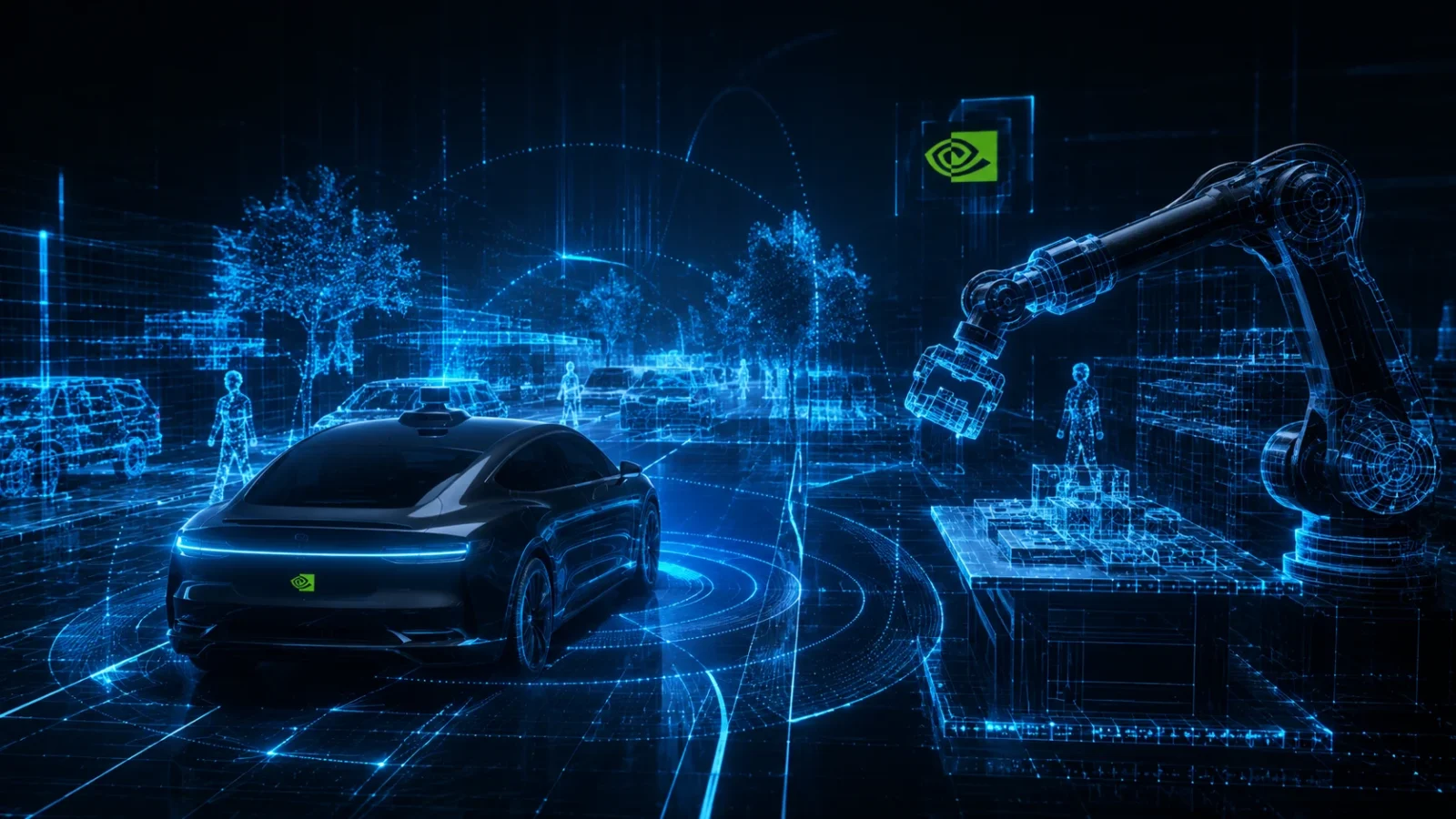
NVIDIA unveiled Cosmos 3, a new open model focused on “physical AI” — that is, artificial intelligence built to understand, simulate and act in the physical world. The launch targets robots, autonomous cars, vision agents and systems that must deal with real environments, motion and decision-making.
Quick answer: what is Cosmos 3?
Cosmos 3 is an open NVIDIA model for physical AI. It combines visual reasoning, world generation, video, sound and action prediction, helping developers train robots, autonomous vehicles and vision agents with less data and more simulation.
Physical AI: what does it mean?
When we talk about AI today, many people think of chatbots, images and video. But the next big frontier may be physical AI: models that do not just answer text, but understand space, motion, objects and actions.
It is the AI that must know a glass can fall, that a robot should not hit a table, that a car needs to predict pedestrian behavior, and that an industrial camera must interpret a scene in real time.
What Cosmos 3 brings
According to NVIDIA, Cosmos 3 uses an architecture called mixture-of-transformers. In practice, the idea is to combine a transformer focused on reasoning with another specialized in generation. This lets the model understand spatial and temporal relationships before generating videos, simulations and action trajectories.
The company says the model can work with text, image, video, ambient sound and actions. That matters because the real world does not come in a single format. A robot, for example, needs to interpret image, motion, noise, position and context all at once.
Why does it matter for robots?
Training robots in the real world is expensive, slow and risky. If a model can generate synthetic data and simulate scenarios with good physical accuracy, companies can speed up tests without relying solely on real environments.
This can cut training cycles from months to days, according to NVIDIA itself. It is a strong promise, especially for robotics, autonomous vehicles, smart warehouses and automated factories.
Open, but strategic
NVIDIA is calling Cosmos 3 an open model, available on platforms like Hugging Face, GitHub and build.nvidia.com. But there is a clear strategy: the more developers use Cosmos, the more NVIDIA strengthens its ecosystem of hardware, cloud, microservices and tools for physical AI.
In other words, it is not just a model launch. It is an attempt to define the infrastructure of the next generation of robots and physical agents.
The Cosmos 3 versions
The lineup includes different versions for different needs. Cosmos 3 Super targets maximum quality in physics and generation, ideal for training robots and autonomous vehicles. Cosmos 3 Nano aims for speed, generating results in fractions of a second. NVIDIA also signals variants aimed at inference closer to the device (at the edge).
This shows NVIDIA wants to cover both labs and data centers and scenarios closer to the real environment.
Why it matters to you
Even if you do not work with robotics, this kind of advance tends to show up in everyday products: smarter cars, better security cameras, more automated factories, home robots and visual inspection systems.
AI is leaving the screen and starting to take physical form.
Frequently asked questions
Is Cosmos 3 a chatbot?
No. It is focused on physical AI, world simulation, vision, video and action.
Is it open?
NVIDIA describes Cosmos 3 as an open model, with access via platforms like Hugging Face and GitHub.
What is it for?
To develop robots, autonomous vehicles, vision agents and systems that need to understand the physical world.
Does it reach the end consumer?
Not directly now, but it may influence future products with robotics, automation and embedded AI.
At DigitalRadar, this is an important turning point: AI is no longer just conversation and is starting to learn the real world.
Related

EU Kids Act: Europe Proposes Banning Social Media and Chatbots for Under-15s
The most sweeping plan yet to protect children online lands in Brussels this Thursday: age-based access tiers, supervised accounts from 13 to…

The GTA 6 Hackers: From the Lapsus$ Teen to the CyberLeek Who Leaked the Map
GTA 6 is the most leaked game in history. In 2022 a Lapsus$ teenager posted 90 videos using a Fire Stick in…

OpenAI Discloses 6 Cases of AI Hiding Mistakes and Launches an Incident Log
On September 16, OpenAI published six cases of "concerning" behavior observed since March — from a model leaving itself instructions to ignore…