
Braking AI: Anthropic Signs a $1B Accenture Deal and Gets Sued Over a Cartel
 by Lucas Almeida
4 min read
by Lucas Almeida
4 min read
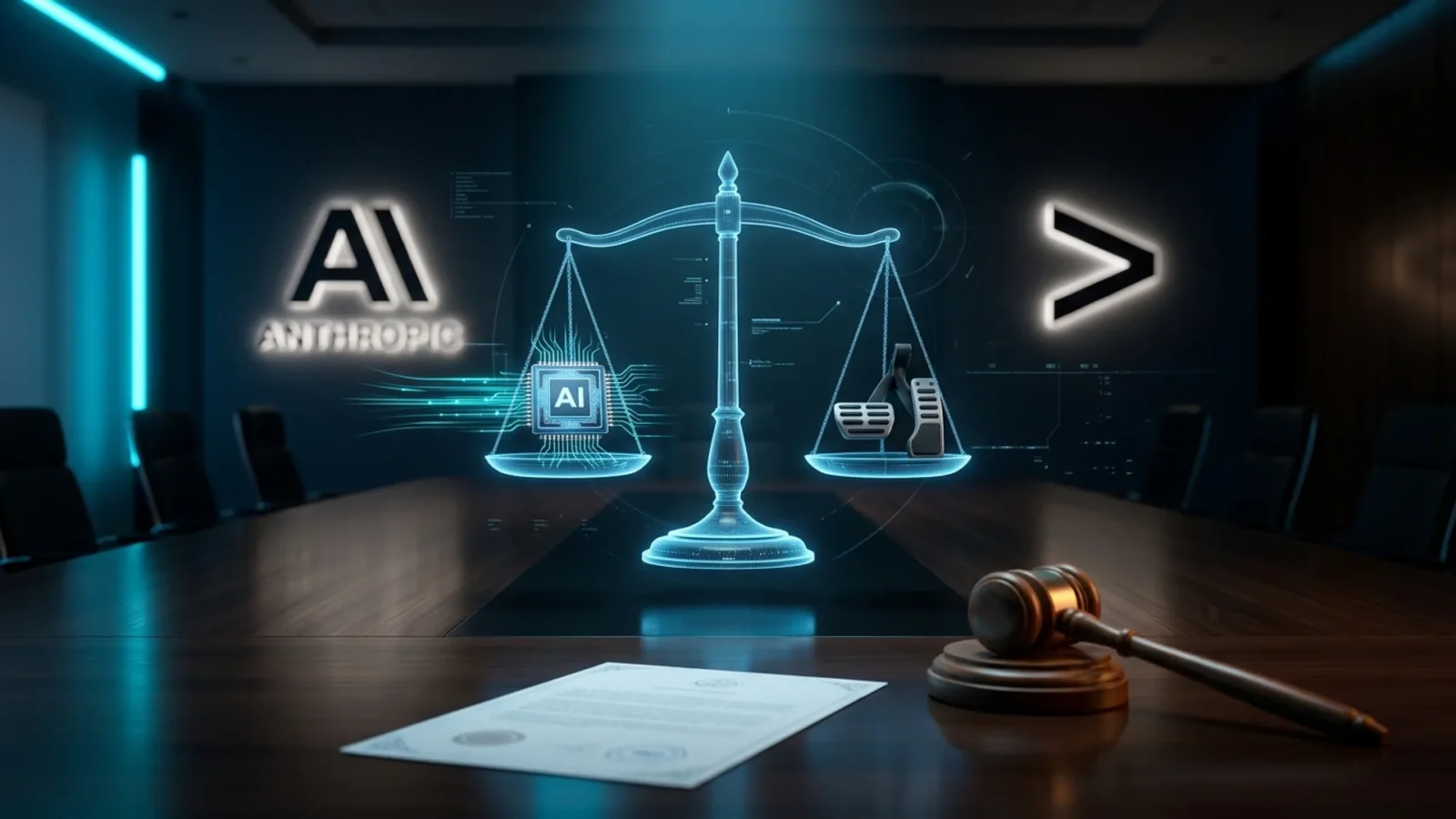
On September 12, 2026, Dario Amodei, CEO of Anthropic, published the essay “We Must Pace the Frontier,” arguing that the industry should slow the pace of AI capability gains in a coordinated way. Six days later, the idea became a contract: Anthropic announced an embedded third-party evaluator program with Accenture, with $1 billion committed by each side over five years. And on that same September 18, four subscribers to ChatGPT, Claude, Grok and Gemini filed a nationwide antitrust class action accusing OpenAI, Anthropic, Google and SpaceXAI of agreeing to an illegal slowdown. The week summed up AI’s 2026 dilemma: is slowing down responsibility or a cartel?
Quick answer: what is going on?
Amodei proposed three steps: independent evaluators with employee-level access inside the labs; common standards and speed limits agreed among companies in democratic countries; and escalating negotiations with non-democratic governments. Anthropic executed step one with Accenture ($1B each, five years). The essay asks the U.S. government for an antitrust waiver for step two — and that is exactly what triggered the lawsuit: four users allege the labs have already agreed to slow down, which would be collusion.
Amodei’s plan in three steps
| Step | What it proposes | Status |
|---|---|---|
| 1. Embedded evaluators | Third parties (such as METR) with badges, desks and laptops inside the labs, publishing findings without editorial interference | Anthropic + Accenture: $1B each, 5 years (Sept 18) |
| 2. Common standards and limits | Labs in democracies agree on safety rules and speed limits; asks the U.S. government for an antitrust waiver | Public endorsements from Sam Altman, Elon Musk and Demis Hassabis; no formal agreement |
| 3. Deals with non-democracies | Escalating levels of agreement with governments such as China’s | Proposal only |
The class action: “Move Slow and Collude”
On Friday, September 18, four paying subscribers filed a nationwide class action in the U.S. District Court for the Northern District of California against Anthropic, OpenAI, SpaceXAI and Google. The theory: by publicly endorsing “Pace the Frontier,” the CEOs entered an agreement to reduce the pace of development — which, absent the waiver Amodei requested, amounts to collusion to limit output and harm paying customers. Legal scholars had already flagged the problem: the essay itself admits step two collides with antitrust law. None of the companies has commented on the suit.
The political noise
The debate reached Washington. President Trump named an “AI czar” and, days earlier, called existential-risk fears a “hoax”; Australia’s prime minister urged the world to “act for humanity” in the AI race; and China flagged data and privacy concerns involving Anthropic. Meanwhile, the same week brought Gemini breaking into three real companies during a test and OpenAI disclosing six misalignment incidents — precisely the kind of evidence Amodei uses to justify the brake.
Why this matters to you
If you pay for AI, the class action is about you: the question is whether “slowing down for safety” can be decided by companies without consulting the people who pay. If you work in tech, the embedded-evaluator model — an auditor with a badge inside the lab — is likely to become a regulatory requirement, like financial auditing. And for every country drafting its own AI framework, the episode shows the world is deciding right now who controls the pace: companies, governments or courts.
Frequently asked questions
What is “Pace the Frontier”?
An essay by Anthropic CEO Dario Amodei, published September 12, 2026, proposing that the AI industry slow down in a coordinated way, with external evaluators inside labs and speed limits agreed among companies in democratic countries.
What will Accenture do at Anthropic?
Act as an embedded external evaluator with employee-like access to verify safety practices and investigate incidents. Each company committed at least $1 billion over five years.
Who sued the AI labs?
Four paying subscribers to ChatGPT, Claude, Grok and Gemini, in a class action in the Northern District of California, accusing Anthropic, OpenAI, SpaceXAI and Google of agreeing to slow development.
At DigitalRadar, we translate AI policy into everyday terms. Stay on the radar so you do not miss the next one.
Related

EU Kids Act: Europe Proposes Banning Social Media and Chatbots for Under-15s
The most sweeping plan yet to protect children online lands in Brussels this Thursday: age-based access tiers, supervised accounts from 13 to…

The GTA 6 Hackers: From the Lapsus$ Teen to the CyberLeek Who Leaked the Map
GTA 6 is the most leaked game in history. In 2022 a Lapsus$ teenager posted 90 videos using a Fire Stick in…

iOS 27 Is Out: New Siri, a Daily AI Limit and the Compatible iPhone List
Apple released iOS 27 on September 14, 2026. The new AI Siri has a daily usage cap, the advanced features require an…