
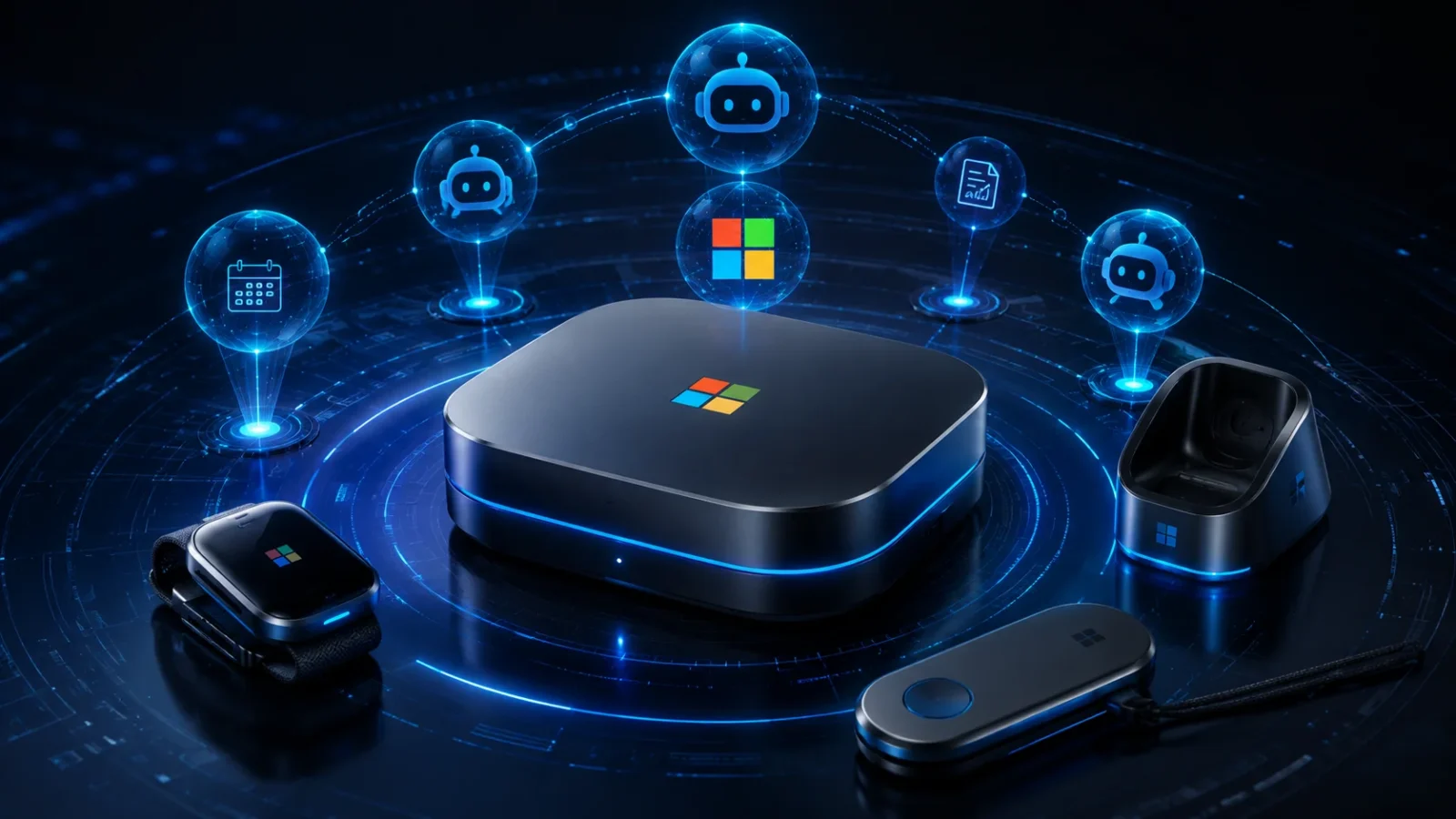
Microsoft unveiled Project Solara, a new platform designed for devices built from the ground up around artificial intelligence agents. Instead of simply adding AI to Windows, Microsoft wants to bring agents into a new category of gadgets: desk devices, smart badges, and enterprise hardware with cameras, microphones, and biometrics.
The idea is simple but ambitious: create hardware where AI is not an extra feature, but the center of the experience.
Quick answer: what is Project Solara?
Project Solara is Microsoft’s platform for “agent-first” devices, meaning gadgets designed from the beginning to run AI agents. The goal is to power small, enterprise-focused intelligent devices with security, management, and agent integration at the core.
AI beyond the notebook
So far, most of the AI agent conversation has centered on PCs, phones, and browsers. Project Solara expands that vision.
Microsoft wants to show that agents can also live inside dedicated devices built for specific tasks. A desk gadget could recognize the user, open a personal agent, and assist during meetings. A smart badge could capture context, transcribe conversations, and act as a bridge between the physical and digital worlds.
The concepts Microsoft showed
According to The Verge, Microsoft demonstrated two concept devices: a desk device similar to a smart display and a wearable badge similar to a corporate access pass. They are not commercial products, but reference designs for hardware partners.
That distinction matters. Microsoft is not necessarily trying to become an AI gadget maker. It wants to create the platform other companies can build on.
Why this matters
Because AI agents need context.
On a computer, they can access files, apps, and the browser. But in the physical world, they need sensors: cameras, microphones, biometrics, location, and environmental information.
Project Solara tries to build that bridge. It points toward devices that understand who is using them, where they are, what is happening, and which agent should take action.
The enterprise angle
Microsoft is clearly aiming at businesses. That makes sense.
In corporate environments, agent-powered gadgets could help with meetings, customer service, logistics, retail, healthcare, and productivity. But they also require strong controls: who can access what, which data is recorded, how conversations are protected, and how the device is managed.
That is why Project Solara is being positioned with enterprise management and security in mind.
The risk: privacy
The proposal is powerful, but sensitive.
A badge with a camera and microphone could be useful for transcription and productivity. But it could also become a privacy nightmare if implemented poorly.
Microsoft will need to convince companies and users that these devices have clear limits, transparent permissions, and real data protection.
Frequently asked questions
Is Project Solara a new Windows?
No. It is a platform for AI agent devices, built differently from traditional Windows.
Will these gadgets be sold to consumers?
The devices shown are reference concepts. The idea is for partners to build real products using the platform.
What are AI agent gadgets for?
Meetings, productivity, customer service, transcription, user identification, and automating tasks in the physical world.
Is this safe?
It depends on implementation. Because these devices involve sensors, cameras, microphones, and personal data, security and privacy will be critical.
At DigitalRadar, we believe Project Solara shows that the next phase of AI may move beyond screens and take shape in intelligent objects around us.

Related

EU Kids Act: Europe Proposes Banning Social Media and Chatbots for Under-15s
The most sweeping plan yet to protect children online lands in Brussels this Thursday: age-based access tiers, supervised accounts from 13 to…

The GTA 6 Hackers: From the Lapsus$ Teen to the CyberLeek Who Leaked the Map
GTA 6 is the most leaked game in history. In 2022 a Lapsus$ teenager posted 90 videos using a Fire Stick in…
Broadcom Books $29.6B and Nvidia Promises 7x More AI per Megawatt
Broadcom booked $29.6 billion in quarterly revenue (+86%) selling custom AI chips, while Nvidia unveiled Vera Rubin with up to 7x more…