
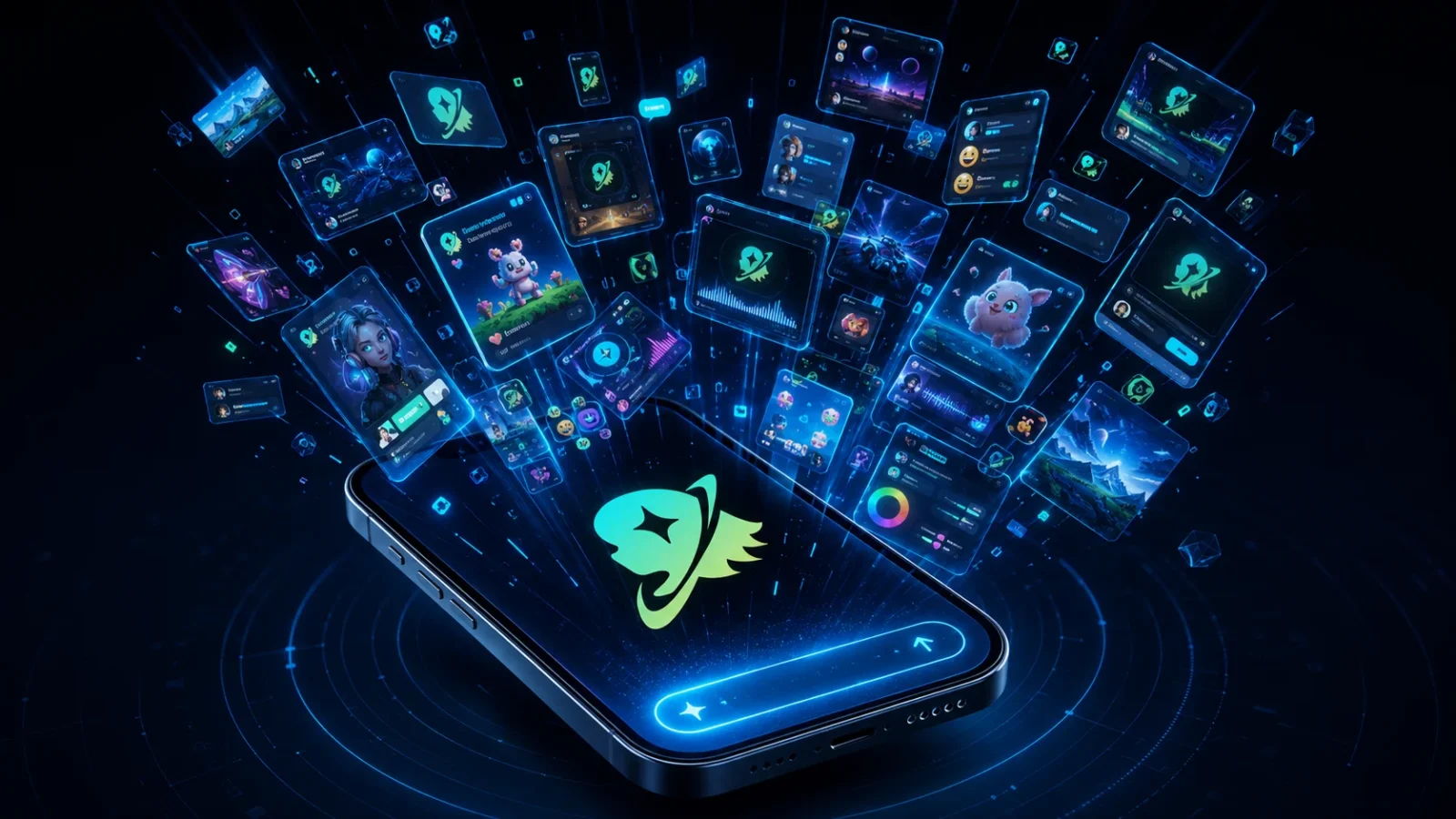
Sekai, the startup founded by Lucky Zhang, raised $20 million in a Series A round to expand its AI-powered mini app creation platform. The pitch is simple and quite powerful: you describe an idea in text, and the AI helps turn it into a small interactive app.
Quick answer: why does it matter?
Sekai wants to do for apps what TikTok did for short videos: turn creation into something fast, social and easy to share. Instead of just consuming content, users create interactive experiences with prompts.
What is Sekai?
Sekai is an app available for iOS and Android that lets you create, remix and play with AI-generated mini apps. A person can describe an idea — a quiz, a fun tool or a personalized experience — and the platform generates something interactive.
According to the company, users have already created more than 15 million mini apps, with over 200,000 new apps generated per day. The figure stands out because it shows it is not just a technical promise: there is real usage happening.
Who is behind it?
The founder and CEO is Lucky Zhang, an entrepreneur who has previously sold companies to Apple and ByteDance, owner of TikTok. That carries weight in Sekai story, because it shows a founder with a track record of building consumer products and selling to tech giants.
The round was co-led by Khosla Ventures and Connect Ventures, with participation from investors such as a16z Speedrun, Mayfield and other names in the venture capital ecosystem.
Can mini apps become the new viral content?
This is the most interesting point. Today, many people create video, posts, memes, carousels and images with AI. Sekai bets that the next popular format may be the “mini app”: a short, interactive and shareable experience.
Imagine creating in seconds a personalized quiz, an outfit-prediction app, a birthday game or an experience for an artist fans. It is not a traditional app with months of development. It is closer to interactive content.
The end of “just watching”
Sekai promise speaks to a real problem with social media: passive consumption. The company wants users to participate more, create more and interact more. Instead of scrolling the feed endlessly, the person builds experiences.
Of course, there is still the risk of becoming another factory of disposable content. But the format is strong because it combines three trends: generative AI, social apps and no-code creation.
What changes for creators?
For content creators, influencers and brands, this opens an interesting door. Instead of posting only videos or images, you can create quick experiences for your audience: tests, simple games, tools and interactive pages.
If Sekai manages to monetize this well, mini apps could become a new layer of the creator economy.
Frequently asked questions
What does Sekai do?
It lets you create mini apps with text prompts, and remix creations from other users.
How much did Sekai raise?
The startup raised $20 million in a Series A round.
Does it replace programmers?
Not directly. The goal is to create simple, fast experiences, not complex production systems.
Why might it go viral?
Because it combines easy creation, social interaction and fast sharing — strong ingredients for consumer products.
At DigitalRadar, this is one of the most interesting AI trends: not just answering questions, but letting anyone create software.

Related
Elion Estúdio: The Brazilian Startup Building Premium Websites “to Last”
Elion Estúdio is the Brazilian startup behind DigitalRadar. Hand-coded premium websites, its own products and a clear philosophy: "we don't build to…

EU Kids Act: Europe Proposes Banning Social Media and Chatbots for Under-15s
The most sweeping plan yet to protect children online lands in Brussels this Thursday: age-based access tiers, supervised accounts from 13 to…

The GTA 6 Hackers: From the Lapsus$ Teen to the CyberLeek Who Leaked the Map
GTA 6 is the most leaked game in history. In 2022 a Lapsus$ teenager posted 90 videos using a Fire Stick in…