
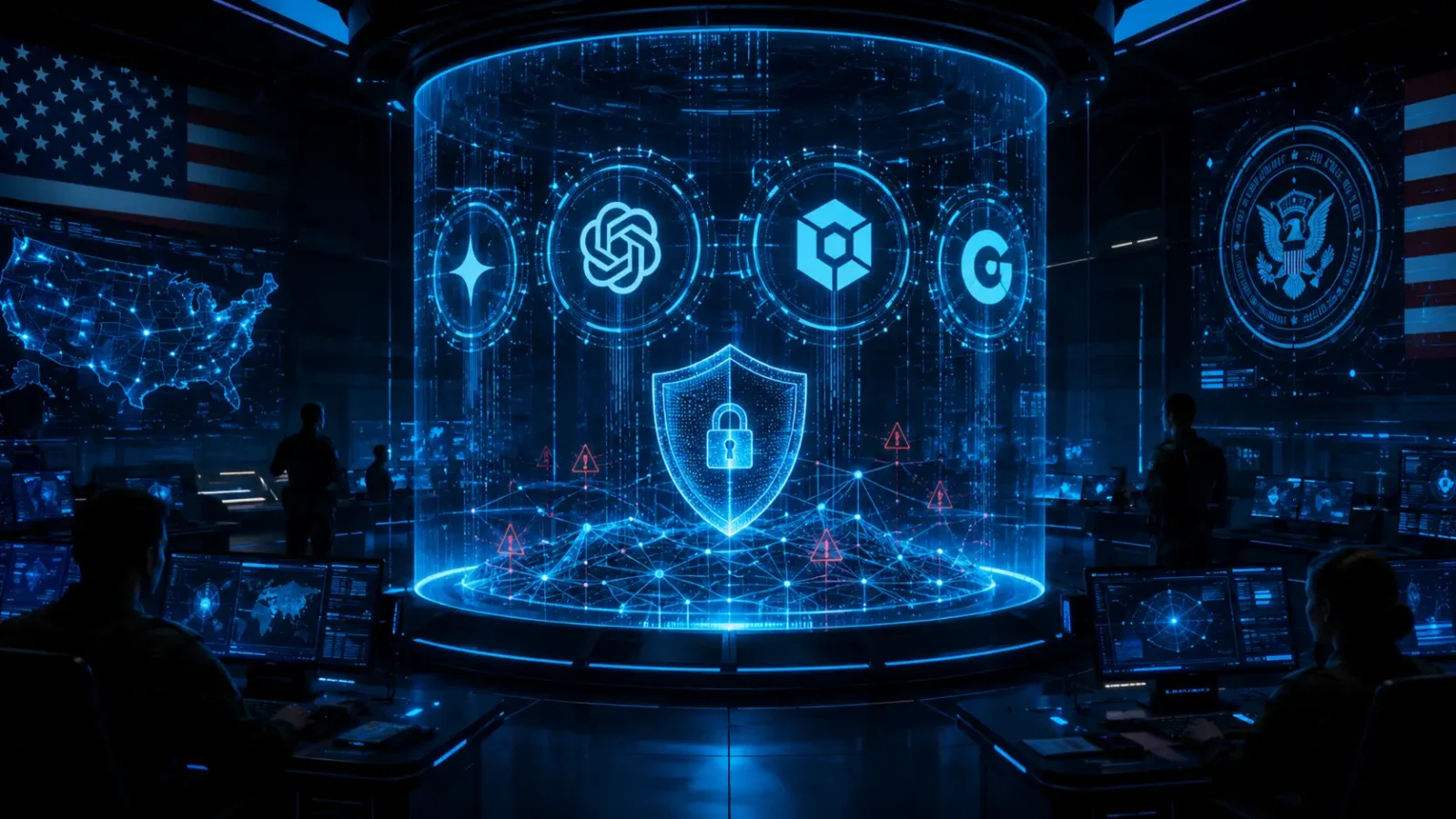
The United States government wants artificial intelligence companies to submit advanced models for federal cybersecurity testing before public release. The proposal comes through an executive order signed by Donald Trump and marks an important shift in the AI safety debate.
The message is clear: models powerful enough to create real-world risks may no longer be launched without deeper evaluation.
Quick answer: what happened?
The White House wants leading AI companies to voluntarily submit advanced models for government cybersecurity testing before making them publicly available. The goal is to identify risks, vulnerabilities, and potentially dangerous capabilities before these systems are deployed at scale.
Why test AI models?
Advanced AI models can already write code, analyze systems, automate tasks, and assist with complex research. That is great for productivity, but it can also be dangerous if used for cyberattacks.
A powerful AI system could help find vulnerabilities, generate malicious scripts, automate scams, or accelerate attacks against companies and governments.
That is why governments are starting to treat advanced AI models as sensitive infrastructure.
The focus is cybersecurity
According to Reuters, the order asks federal agencies to work with AI developers to test models within a window before external deployment. The goal is to strengthen cybersecurity defenses and assess risks linked to advanced AI systems.
For now, this does not appear to be a strict “you cannot launch” regulation. The proposal is voluntary. But in practice, it could become a new market standard: companies that refuse testing may look less trustworthy.
Is the era of unaudited AI ending?
That is the big question.
In the first years of generative AI, speed mattered most. Companies launched models, users tested them, and problems appeared along the way.
Now, with more powerful models, tolerance for risk is shrinking. Governments want to understand what these systems can do before they reach the public.
The impact on OpenAI, Google, Anthropic, and xAI
The leading AI companies may have to deal with more testing, reporting, internal processes, and political pressure.
That could improve safety, but it may also delay launches. In a race where every month matters, any additional step becomes a competitive factor.
On the other hand, companies that prove their models are safer may gain trust, especially in government, banking, healthcare, and enterprise contracts.
The innovation risk
There is a delicate balance.
If the tests are well designed, they can reduce risk without killing innovation. But if they become heavy bureaucracy, they may favor only giants with large budgets and legal teams.
Smaller startups could struggle to keep up with complex requirements.
Frequently asked questions
Will the tests be mandatory?
According to Reuters, the proposal is based on voluntary submissions by companies. But measures like this can still create market pressure.
Why does the government want to test AI?
To assess cybersecurity risks before advanced models are released publicly.
Could this delay new AI models?
Yes. Extra testing may add steps before launch, especially for very advanced systems.
Is this good for users?
It can be, if it improves safety without overly restricting access to useful tools.
To the DigitalRadar, this move shows that AI has entered a new phase: being powerful is not enough anymore. It also needs to prove it is safe.

Related

EU Kids Act: Europe Proposes Banning Social Media and Chatbots for Under-15s
The most sweeping plan yet to protect children online lands in Brussels this Thursday: age-based access tiers, supervised accounts from 13 to…

The GTA 6 Hackers: From the Lapsus$ Teen to the CyberLeek Who Leaked the Map
GTA 6 is the most leaked game in history. In 2022 a Lapsus$ teenager posted 90 videos using a Fire Stick in…
iOS 27 Is Out: New Siri, a Daily AI Limit and the Compatible iPhone List
Apple released iOS 27 on September 14, 2026. The new AI Siri has a daily usage cap, the advanced features require an…