
Google Starts Paying Websites for Content Used in AI Answers
 by Lucas Almeida
4 min read
by Lucas Almeida
4 min read
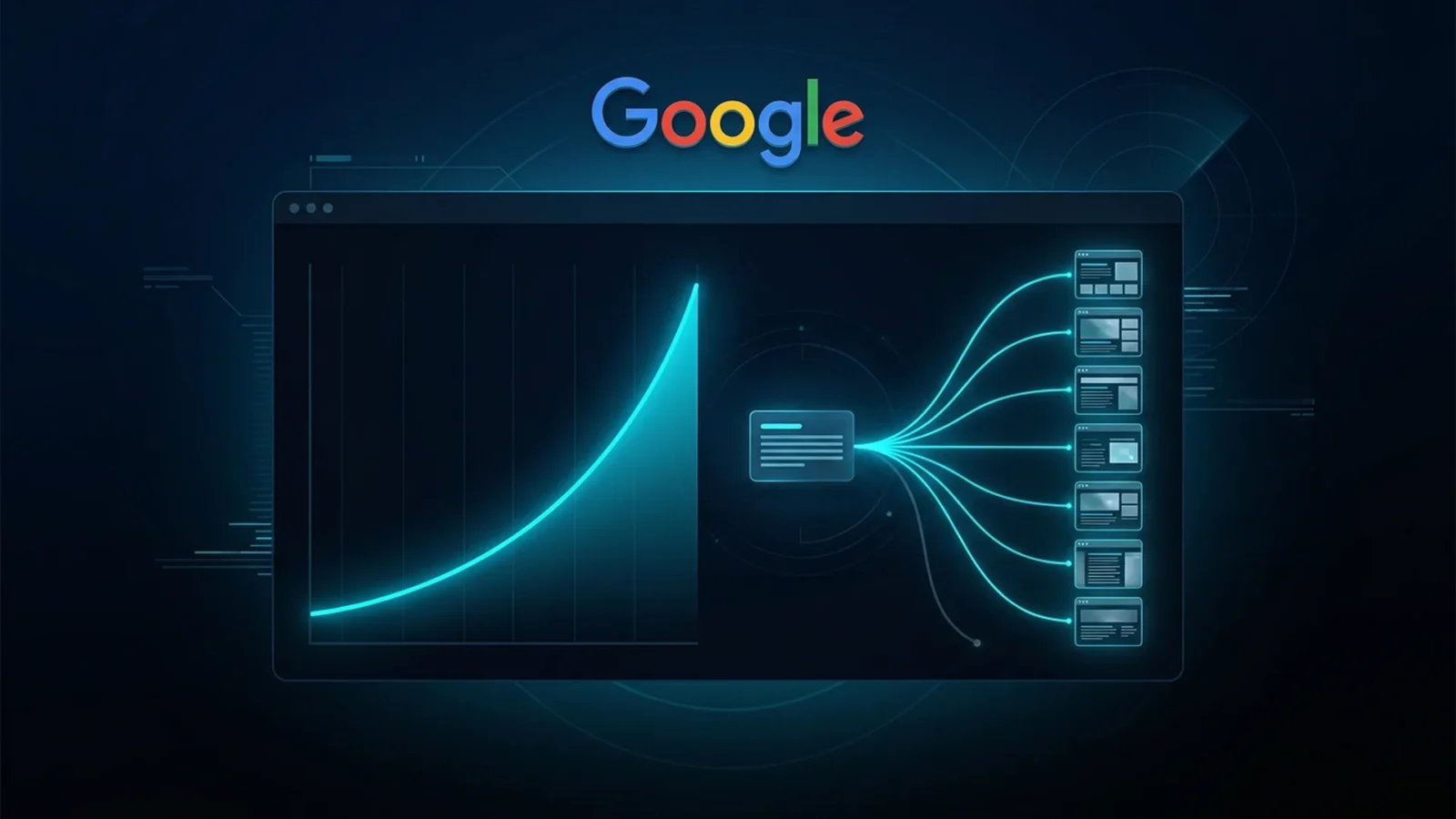
Google has started paying websites whose content is used to build AI answers. The program is called the AI contribution pilot, it runs inside Search Console, and it already covers around 100 publishers. It is the first time the company sends money directly to the people producing the content that feeds AI Overviews, AI Mode and the Gemini app — and it lands as AI Overviews jumped from 26% to 80% of branded queries.
Quick answer: how does the payment work?
Invited publishers accept the terms inside Search Console and get an earnings widget. A site is paid when its pages contribute significantly to generating a response in Gemini, AI Overviews or AI Mode. Only the generation stage counts: pages merely linked in a response, or consulted to confirm a fact after the text was written, are not paid.
How much it pays — and the problem with the number
Reported figures vary dramatically: one participant received more than $1 million over a year, while another landed in the $50,000 to $60,000 range. The gap is unexplained.
And here is the critical part: the publisher sees a monthly earnings figure and nothing else. There is no way to know which pages earned, how often the content was used, or how Google calculated the payment. It is a black box — with money inside, but a black box.
| What gets paid | What does not |
|---|---|
| A page used in generating the answer | A page merely linked in the answer |
| Significant contribution to the generated text | A page used to fact-check afterwards |
| Gemini, AI Overviews and AI Mode | Traditional search results |
What this changes in content strategy
For two years the conversation has been “Google’s AI steals my traffic.” The pilot changes the question to “is my content the kind AI uses to build the answer?” — and those are different things.
Content that makes it into generation usually has three traits: it answers the question directly and completely, it carries concrete data (a number, date, price, specification) and it is structured (question-shaped H2s, tables, FAQ). Generic text that paraphrases what already exists does not make it into generation — at best it becomes a confirmation link, which does not pay.
Why this matters
If you live on ad revenue or organic traffic, the practical read is this: search revenue is ceasing to be only about clicks. A second stream is forming, paid by contribution, with opaque criteria and invite-only access. You cannot sign up today — but you can prepare, and the preparation is the same work that already improves your SEO: answer the question up front, use verifiable data and structure the page.
The risk to watch is dependency. If Google pays for contribution but will not say how it calculates, publishers gain revenue they can neither forecast nor optimize — and revenue like that has historically disappeared without notice.
Frequently asked questions
Can any site join?
No. The pilot is invite-only and covers around 100 publishers. Participants accept terms through Search Console and can leave from the same settings page.
How much does Google pay?
It varies widely. Among early participants, reported figures run from $50,000–$60,000 up to more than $1 million a year.
Does being cited in an answer guarantee payment?
No. Only the generation stage counts. If your page only appears as a link, or is consulted to confirm a fact afterwards, there is no payment.
How do I improve the odds of being used in generation?
Answer the question directly up front, bring verifiable numbers and sources, and structure the content with question-shaped H2s, tables and an FAQ.
At DigitalRadar, we track how search pays — or stops paying — the people who make the content. Stay on the radar.
Related

Google Is Showing Links Again in AI Mode: 26% of Answers Cite Sites
After months of draining publisher traffic, Google began showing more links in AI answers: 26.2% of AI Overviews now cite external sources.…
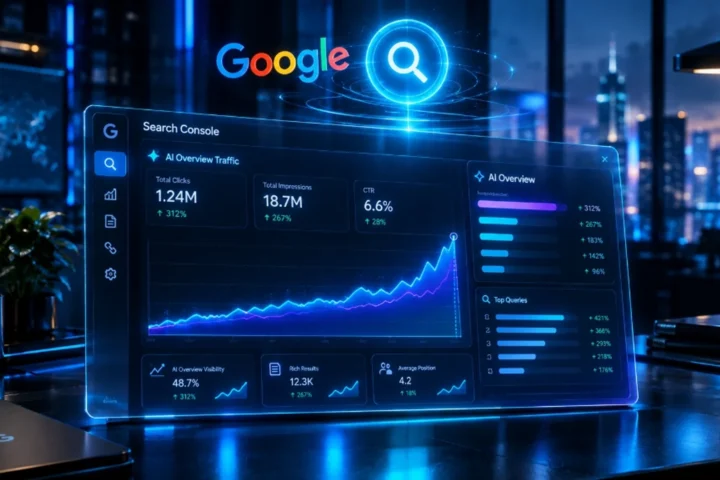
Google Search Console rolls out dedicated AI Overviews traffic metrics
In a watershed milestone eagerly anticipated for over two years by SEO strategists and publishers worldwide, Google Search Console officially deployed on…

TikTok and YouTube Shorts Deploy 24/7 AI Avatar Live Shopping Storefronts
In concurrent product announcements on September 21, ByteDance and Google unlocked autonomous synthetic commerce: merchants and brands on TikTok Shop and YouTube…