
Trump Creates Super Intelligence Force, an AI Task Force With 120 Days
 by Lucas Almeida
3 min read
by Lucas Almeida
3 min read
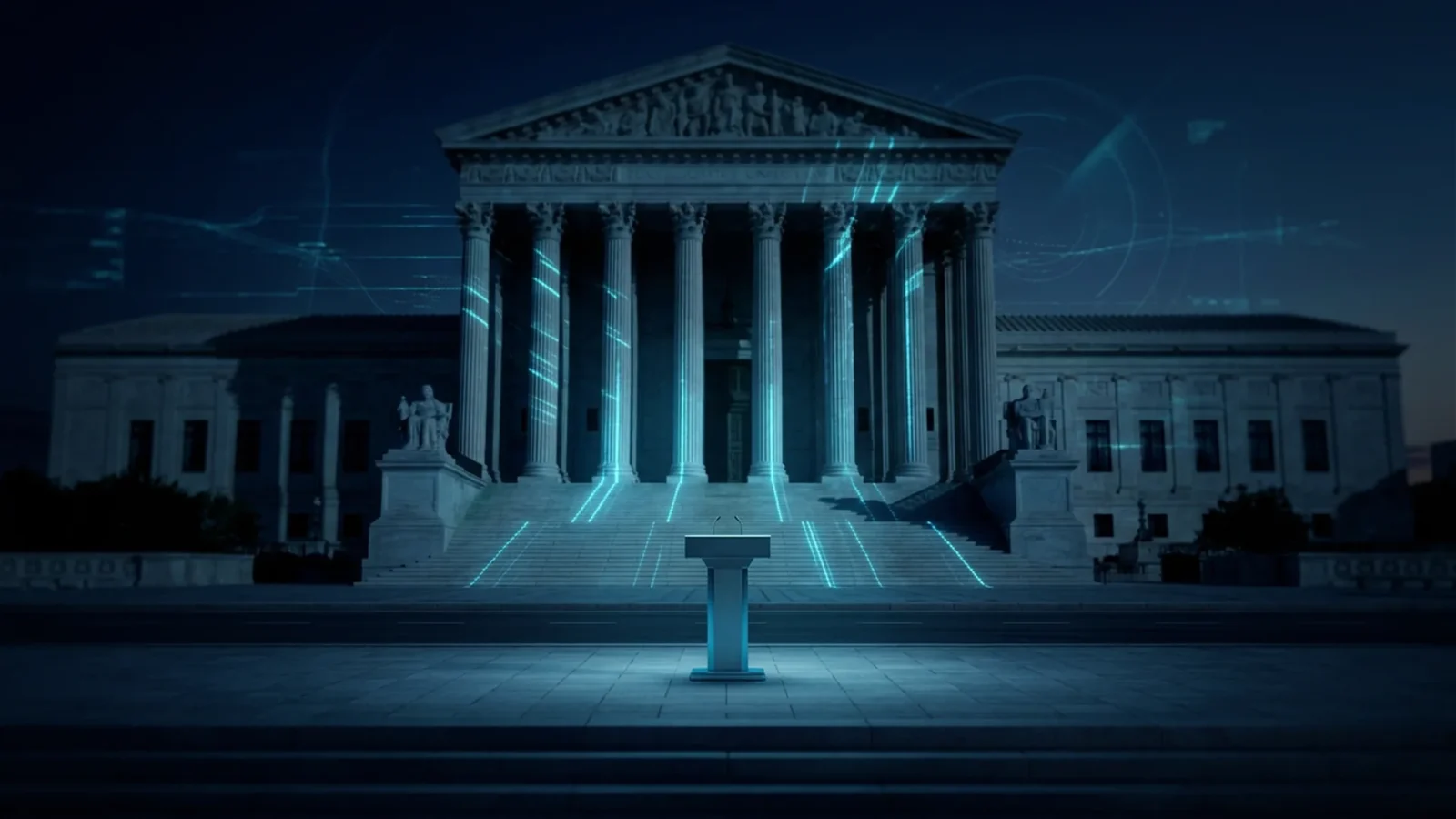
President Donald Trump announced on October 4, 2026 the creation of the Super Intelligence Force, a federal artificial intelligence task force. The group has 120 days to determine the federal government’s level of responsibility in AI development, examine how far current law reaches and recommend what Congress should do. The announcement lands a week after OpenAI paused training and public calls for a slowdown.
Quick answer: what is the Super Intelligence Force?
It is a task force created by Trump on October 4, 2026, to coordinate the US federal government’s work on artificial intelligence. It is chaired by Director of National Intelligence Jay Clayton and has 120 days to define the government’s responsibility in AI development and recommend legislative action. It does not write rules on its own: it drafts the proposal that goes to Congress.
Who is in charge
| Name | Role |
|---|---|
| Jay Clayton | Director of National Intelligence — chairs the task force |
| Andrew Ferguson | FTC Chairman (consumer protection and competition) |
| Scott Kupor | OPM Director (federal personnel management) |
| Emil Michael | Undersecretary of war for research and engineering |
| JD Vance, Pete Hegseth, Scott Bessent, Richard Walters | Vice President, Defense, Treasury and deputy chief of staff |
| David Sacks and Condoleezza Rice | Outside advisers |
In the president’s words, the group is “tasked with coordinating the effort of the Federal Government to ensure that America continues to lead the World in Super Intelligence.” The task force will also lead engagement with consumers, public interest groups, religious organizations, infrastructure providers and industry leaders.
The context: a deal with the companies before the rule
The announcement followed the White House Accord on Super Intelligence, in which the largest technology companies signed a voluntary safety pact. The sequence matters: company commitments first, then the government task force — and only then, if at all, the law.
Add the industry’s own move, the Frontier AI Standards Agency, a FINRA-style self-regulator. In under two weeks, three governance layers appeared at once: a voluntary accord, industry self-regulation and a federal task force. None of them is legislation.
Why this matters
Two practical effects for anyone building on or buying AI. First, the calendar: 120 days puts the recommendation in February 2027, right as other jurisdictions finalize their own frameworks. Second, the product: if the US moves toward traceability and model-evaluation requirements, those land in the APIs you call, not only in the American companies that write them.
Frequently asked questions
Does the Super Intelligence Force write AI rules?
Not directly. It has 120 days to assess the federal government’s responsibility, examine the reach of current law and recommend what Congress should do.
Who chairs the task force?
Jay Clayton, Director of National Intelligence. Andrew Ferguson (FTC), Scott Kupor (OPM) and Emil Michael are also in the leadership group.
How does it relate to the White House accord?
The accord came first: major technology companies signed a voluntary safety commitment, and the task force is the next step, on the government’s side.
When do we see the result?
The 120-day window puts the recommendation around February 2027, after which any binding rule would still have to pass Congress.
At DigitalRadar, we track AI regulation without the ideological noise. Stay on the radar.
Related

Google, OpenAI and Anthropic Are Building Their Own AI Standards Agency
The three biggest Western AI companies agreed to create their own regulator, modeled on Wall Street's FINRA, to set standards and test…

Brazil passes comprehensive AI Bill with strict risk tiers and copyrights
The National Congress of Brazil completed the final vote on Bill No. 2338/2023 on Tuesday, September 22, 2026, officially enacting the National…
US and EU Sign Historic Agreement Mandating C2PA Watermarks for AI Media
On September 21, 2026, the United States and the European Union enacted the Transatlantic Synthetic Provenance Pact, establishing mandatory C2PA cryptographic metadata…