
Broadcom Books $29.6B and Nvidia Promises 7x More AI per Megawatt
 by Théo Carvalho
3 min read
by Théo Carvalho
3 min read
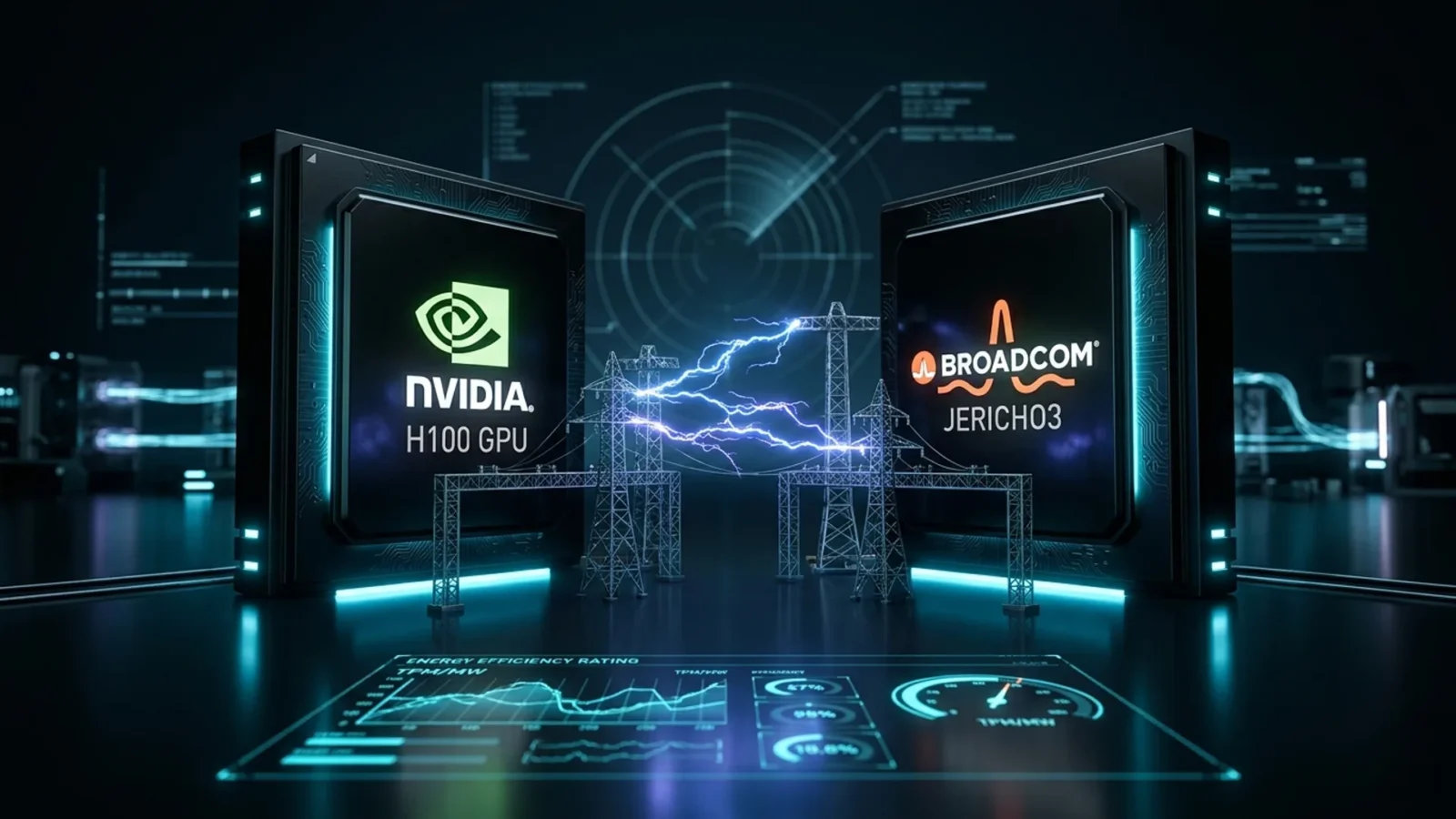
Two September 2026 headlines show how the AI chip race has shifted. Broadcom reported quarterly revenue of $29.6 billion, up 86% year over year, driven by custom AI chips built for cloud giants. Days later, Nvidia said its next platform, Vera Rubin, delivers up to seven times more tokens per megawatt than the Blackwell generation. The message from both: the bottleneck is now electricity.
Quick answer: what happened?
Broadcom closed its fiscal third quarter with $29.6 billion in revenue (+86%) and roughly $13.1 billion in profit, more than triple the prior year; AI semiconductor revenue was $16.7 billion, 73% of it from custom chips. Nvidia, meanwhile, shared early Vera Rubin tests showing up to 7x better token throughput per megawatt versus Blackwell, attacking power consumption — now the main constraint on AI data centers.
Broadcom: the profit in building the customer’s chip
While Nvidia sells off-the-shelf GPUs, Broadcom designs exclusive chips (ASICs) for customers such as Google, Meta and OpenAI. The model is less flashy but lucrative: of the $16.7 billion in AI semiconductors this quarter, 73% came from those custom parts. Profit tripled because every design win is a multi-year contract with guaranteed volume.
The quarter in numbers
| Metric (fiscal Q3 2026) | Value | Year over year |
|---|---|---|
| Total revenue | $29.6 billion | +86% |
| Quarterly profit | ~$13.1 billion | More than tripled |
| AI semiconductor revenue | $16.7 billion | 73% from custom chips |
Nvidia Vera Rubin: the metric is now “per megawatt”
For years Nvidia sold raw performance. Now the pitch is efficiency: in early tests, Vera Rubin generates up to seven times more tokens for every megawatt consumed, compared with Blackwell. It makes sense — AI data centers are already hitting grid limits, and startups like Crusoe raise billions just to build where spare power exists. Whoever delivers more AI per watt sells more, even at the same chip price.
The political noise
The same week, Nvidia CEO Jensen Huang attended a state dinner with Chinese President Xi Jinping and responded to President Trump — who called fears of an AI “takeover” a “hoax” — by saying Nvidia would ensure “everybody wins in the AI race in America.” AI chips have become a matter of diplomacy.
Why this matters to you
For investors, Broadcom shows there is big money outside Nvidia, in a more predictable model. For companies buying cloud, the race for energy efficiency is what will hold — or push down — the price per token over the next two years. And for regions with abundant renewable power, the “tokens per megawatt” metric creates a concrete opportunity to attract data centers, as long as transmission infrastructure keeps up.
Frequently asked questions
How much revenue did Broadcom report?
$29.6 billion in fiscal Q3 2026, up 86% year over year, with $16.7 billion from AI semiconductors.
What is Nvidia Vera Rubin?
The AI chip platform that succeeds Blackwell. In early tests it delivers up to 7x better token throughput per megawatt.
Why did “tokens per megawatt” become the key metric?
Because electricity has become the main limit on expanding AI data centers. More tokens per megawatt means more AI from the same available power.
At DigitalRadar, we follow the giants that move technology. Stay on the radar so you do not miss the next analysis.
Related
John Ternus’s Apple: Higher Prices and the iPhone 17 Pro Discontinued
At the first event under John Ternus, Apple launched its foldable iPhone, raised prices across nearly the whole lineup, discontinued the iPhone…

Spelljacking: What It Is and Security Tips
This article was created by the Bitdefender team for exclusive use on the Digital Radar blog Spell checkers and text-verification features make…

Google will let websites escape AI Search — and this could change SEO
Google will give publishers a way to opt out of AI-powered search features, including AI Overviews, AI Mode, and generative answers in…